Ayyalur Beekeeping Project
Habitat conservation and sustainable livelihood development for tribal women through beekeeping, supported by The World Bee Project, UK.
- Livelihoods
- 2022 – 2024
- 20 villages
- The World Bee Project, UK
About the project
“Ayyalur Habitat Conservation and Tribal Women’s Sustainable Livelihood Development through Beekeeping”
The World Bee Project (TWBP), UK agreed to support a three-year project (2022–2024) in 20 villages in the Ayyalur landscape. It aims to improve the livelihoods of 40 rural women through homestead honey production.
The project also includes a research component on raising the productivity of agricultural crops through bee pollination, and it ensures sustainable resource use and conservation.
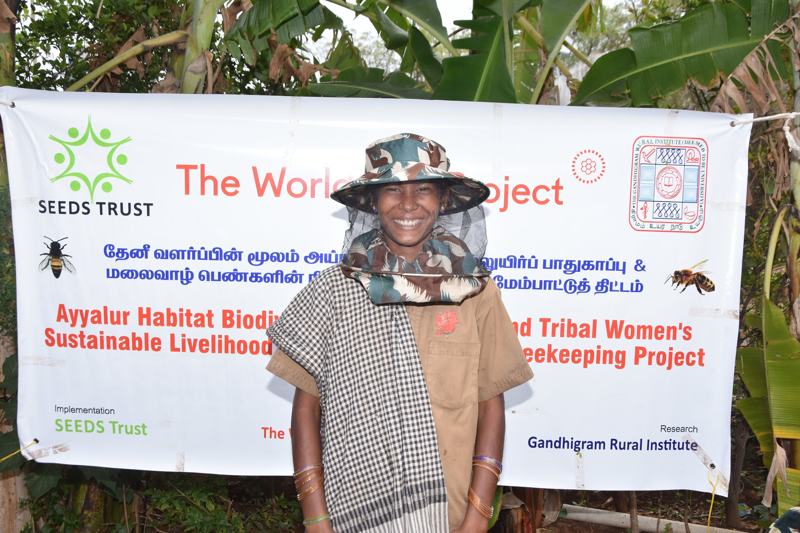
- Programme area
- Livelihoods
- Scope
- 2022 – 2024 · 20 villages
- Supported by
- The World Bee Project, UK
- Implemented by
- SEEDS Trust
- Research
- Gandhigram Rural Institute
Planned over three years
- 20villages selected each year
- 40tribal women each year, 120 in three years
- 5beehives for each woman
- 600beehives with accessories
- 6,000nectar-yielding plants (2,000 seedlings a year)
- 1beekeepers’ federation and an Excellence Centre
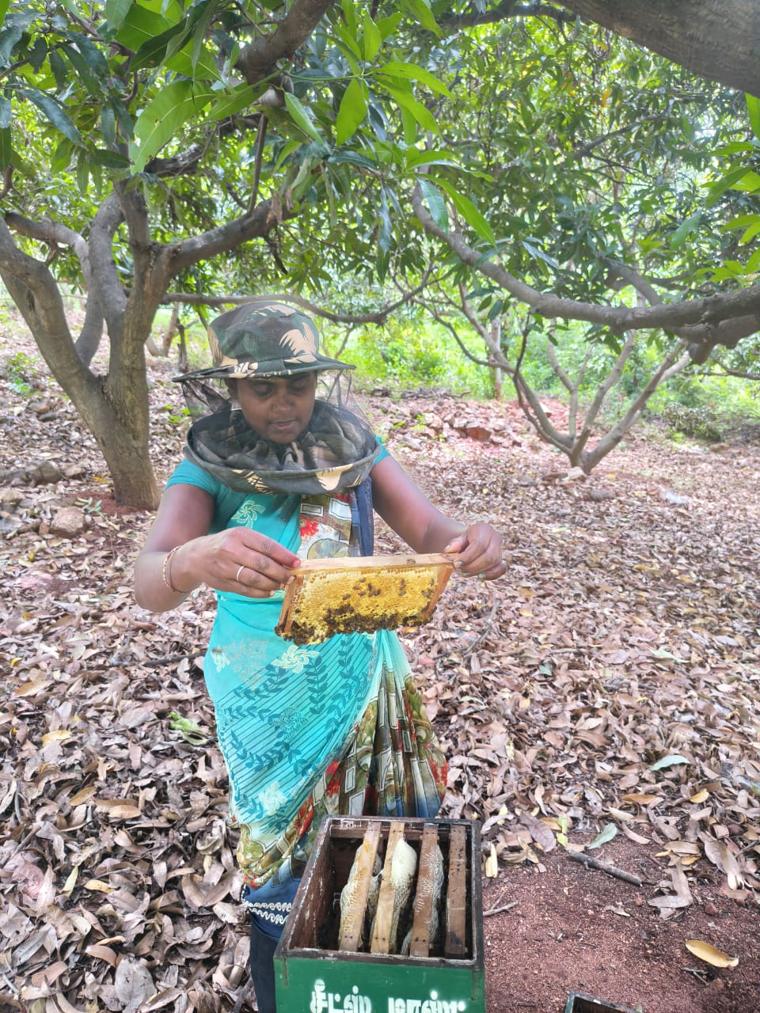
Achievements, January to December 2022
- 40beneficiaries selected and trained
- 200colonies in as many hives
- 561 kghoney produced and sold
- 2,000seedlings planted
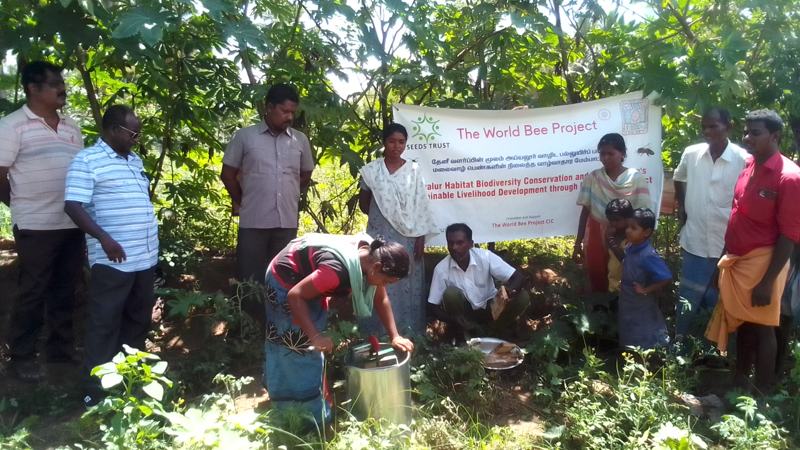
- Awareness programmes on biodiversity, the ill effects of ecosystem degradation, and the role of honeybees in conservation and livelihoods were held through group meetings in all 20 villages.
- An orientation meeting briefed project staff on activities and expected outcomes.
- From the 20 villages, 40 beneficiaries who wished to rear honeybees and adopt apiculture and honey value-addition technologies were selected.
- Baseline data were collected on socio-economic conditions, knowledge of honeybee rearing and honey collection, value addition, and the role of honeybees in ecosystem restoration.
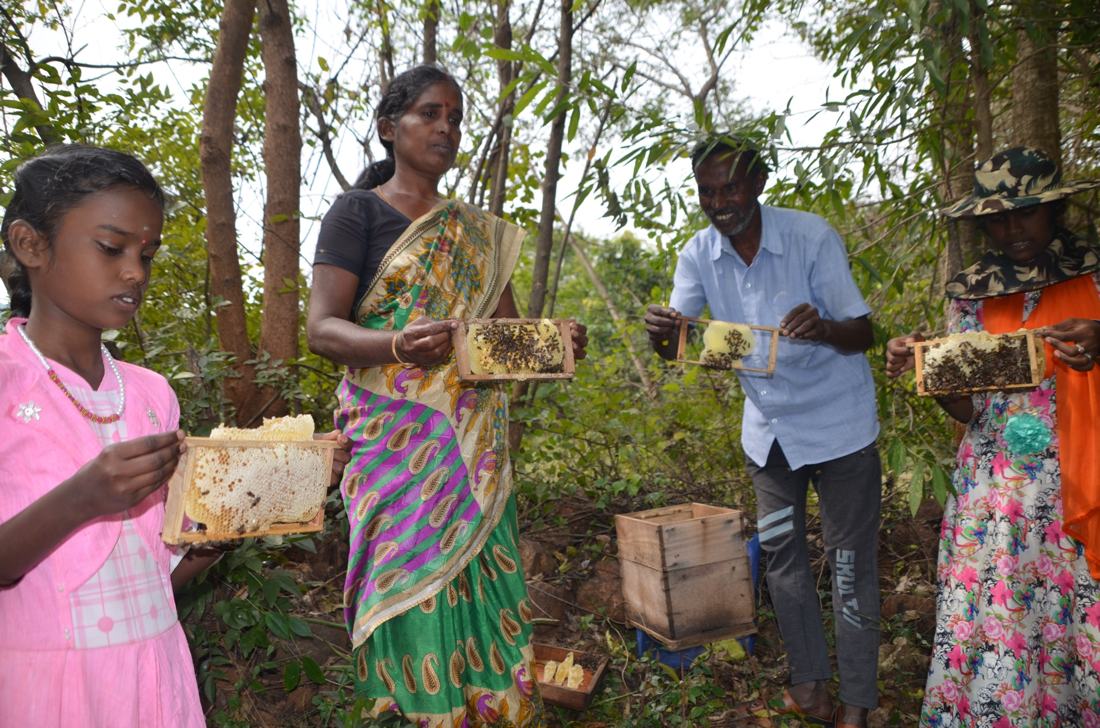
- Skill training on value addition of honey and wax, and on improving traditional skills, was given to the 40 beneficiaries.
- Beehives and accessories were distributed to the 40 beneficiaries.
- By June, after three honey harvests and colony division, the 40 beneficiaries had 80 new colonies, making 200 colonies in as many hives.
- 561 kg of honey had been produced and sold.
- 2,000 seedlings of various species were raised in the community nursery and planted in the fields of the 40 beneficiaries (50 plants each).
- A floral chart for enhancing bee foraging resources was prepared, including a Tamil version.
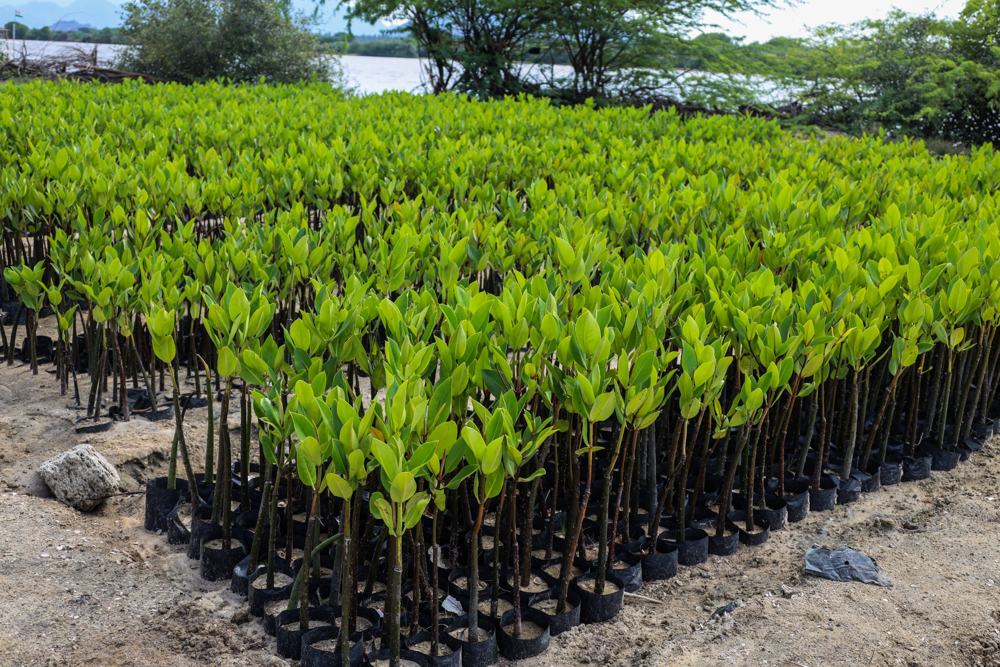
Mangrove beekeeping project
“Pandiyar Mangrove Wetlands Ecosystem Conservation and Additional Livelihood Development through Beekeeping for Fisherwomen”
Also supported by The World Bee Project (2022–2024), this project works in 10 villages of the Pandiyar river estuary, Kanniyakumari district, to enhance the livelihoods of 40 fisherwomen through beekeeping and biodiversity conservation. It includes a research component on crop productivity through pollination services.
Each woman receives 5 beehives, 600 beehives with accessories are distributed over three years, and 6,000 nectar-yielding plants are planted (50 plants per beneficiary, 2,000 seedlings a year).
Achievements, January to December 2022
- An orientation meeting on apiculture for ecosystem restoration and livelihoods, and on how to implement the project in mangrove areas, was given to the project team.
- From the 10 villages, 40 beneficiaries keen to rear honeybees were carefully selected.
- Baseline data on socio-economic conditions, honeybee rearing knowledge, honey collection and value addition were collected in the local language.
- Skill training on honeybee rearing and honey production was given to the 40 beneficiaries, and beehives and accessories were distributed.
- Strong wind and intermittent rain hampered honey production: only 250 to 500 g per hive until June, and very little from July to December because of adverse weather.
- 2,000 seedlings of various plant species were planted in and around households in October 2022.
- A floral chart for enhancing honeybee foraging resources was prepared.
Programme-wide impact
The initiative now spans forest and estuarine-fringe villages, organised through three community user groups and an apex federation.
- 90villages
- 240indigenous women, honey hunters and fisherfolk women
- 1,600beehives of Apis cerana indica
- 90,000native nectar-rich trees
- 50%increase in household incomes
- 4–6 thoney sold each year
Women from neighbouring indigenous communities are asking to join. The project is also a living laboratory for school students, agricultural extension staff and academic researchers.